Costa Brava road trip by convertible
A Costa Brava road trip starts about 75 minutes from Barcelona. Drive the GI-682 cliff road from Tossa de Mar, then choose one, three or five days of coves, fishing villages and medieval towns.
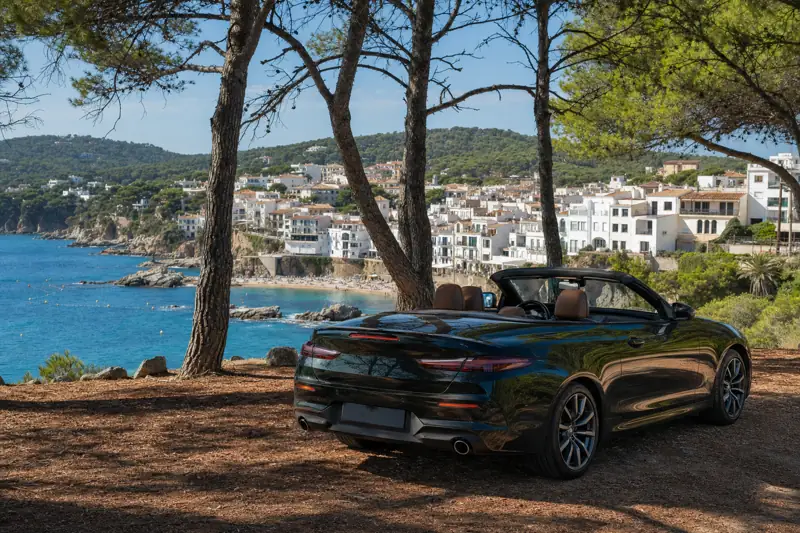
The route
Take the C-32 north to its end, then follow signs to Tossa de Mar. Walk up to the Vila Vella walls, then join the GI-682 towards Sant Feliu. Continue to Calella de Palafrugell for dinner on the beach and return on the AP-7 in under two hours.
Tips
The GI-682 is narrow: go early on weekends when cyclists fill it after 10:00. Allow a full day; a two-day rental lets you stay overnight in Begur or Calella.
Itinerary in 1 day
Leave Barcelona early on the C-32 and follow signs to Tossa de Mar. Park in one of the paid car parks at the edge of town and walk up to the walls of the Vila Vella. Then drive the GI-682 to Sant Feliu de Guíxols, stretch your legs on the coastal path at S'Agaró and continue via Palamós to Calella de Palafrugell for a late lunch by the fishermen's arches. Return on the AP-7, which has been toll-free since September 2021. The whole loop is around 260 km, within the 300 km per day included in every rental.
In 3 days
Day 1: Tossa de Mar, the GI-682 and Sant Feliu de Guíxols, with a night in Calella de Palafrugell or Llafranc. Day 2: walk or drive up to the Sant Sebastià lighthouse above Llafranc, swim at Tamariu, then continue to Begur and its coves, Aiguablava, Sa Tuna and Sa Riera. In the late afternoon, drive inland to the medieval villages of Pals and Peratallada. Day 3: head north to L'Escala for the Greek and Roman ruins of Empúries and an anchovy lunch, then return to Barcelona on the AP-7 in about 1 h 45.
In 5 days
Follow the three-day route, then keep going north. Day 4: from L'Escala drive to Roses and take the winding road over the hills to Cadaqués, the white village where Dalí spent his summers. Leave the car at the entrance to town and explore on foot. Day 5: go out to Cap de Creus, the easternmost point of the Iberian Peninsula, early in the morning, then drive back via Figueres, with time for the Dalí Theatre-Museum, before the AP-7 takes you to Barcelona. With seven days you can add a rest day in Begur and one in Cadaqués; rentals of 7 days or more are 20% cheaper per day.
Coves you can reach by car and where to park
Most calas on the Costa Brava sit at the end of short roads with small car parks that fill before 10:00 in July and August. In Begur, access to coves such as Aiguablava, Sa Tuna and Sa Riera is regulated in high season, with paid or limited parking, and the town has run a seasonal shuttle bus from the centre. Calella de Palafrugell, Llafranc and Tamariu have paid street parking and car parks on the edge of the village. Near Cap de Creus, access by private car to the lighthouse has been restricted in summer. Rules change from season to season, so check the town hall website before you go, arrive early and leave nothing visible in the car.
Villages worth the detour
Pals and Peratallada are stone villages a few kilometres inland: park in the paid car parks outside the old centre and walk in, as the lanes are narrow and partly closed to traffic. Begur has a hilltop castle and colonial houses built by emigrants who returned from Cuba. Calella de Palafrugell is known for its fishermen's arches and summer habaneras. Tossa de Mar is the only walled medieval town on the Catalan coast, and Cadaqués, at the end of a mountain road, is worth an overnight stay. If you want to know what to see on the Costa Brava in one trip, these villages and the GI-682 are a good start.
Best cars for this drive
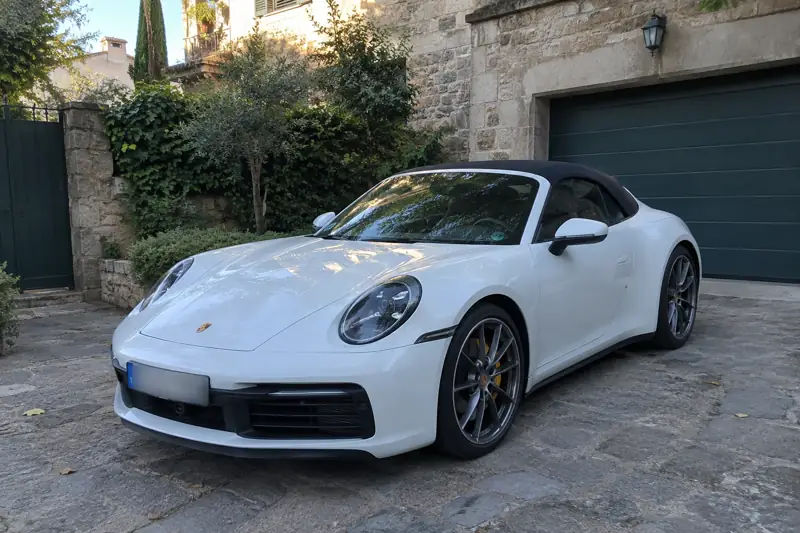
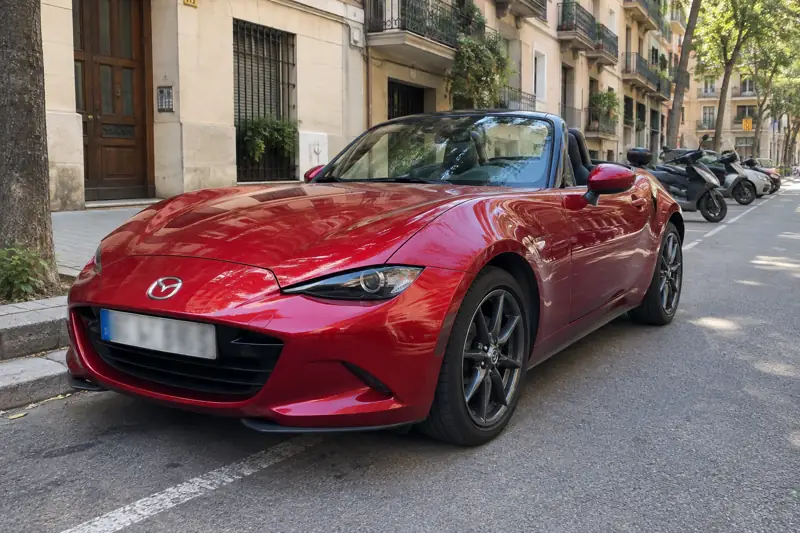
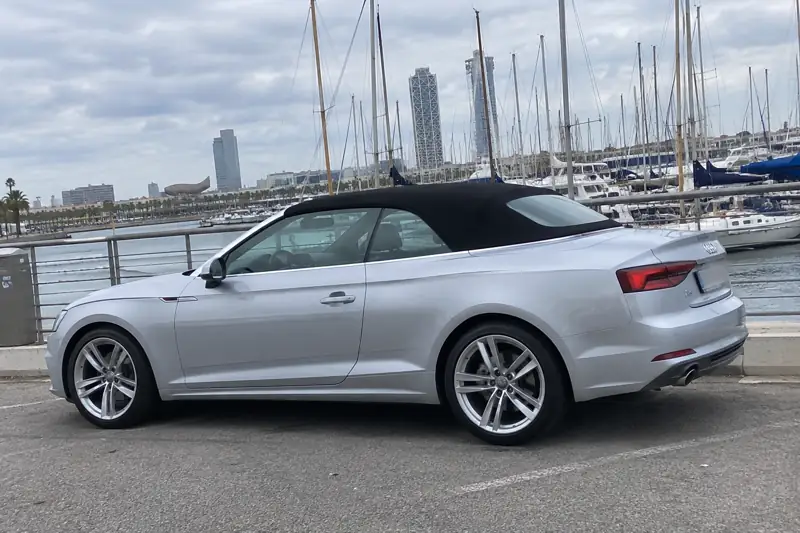
FAQ
How many days do I need for a Costa Brava road trip?
One day covers Tossa de Mar, the GI-682 and Calella de Palafrugell. Three days add the Begur coves, Pals, Peratallada and Empúries. Five days take you to Cadaqués and Cap de Creus, and seven let you slow down. Rentals of 3 to 6 days are 10% cheaper per day, 7 days or more 20%.
Where can I park on the Costa Brava in summer?
In July and August small cove car parks fill early, and several towns, such as Begur, regulate access in high season, with paid parking or a seasonal shuttle bus. Use the car parks at the edge of each village, arrive before 10:00 and check the town hall website for the current rules.
Are there tolls between Barcelona and the Costa Brava?
The AP-7 has been toll-free since September 2021. The C-32 along the Maresme coast north of Barcelona is a toll road; the rates are published by the operator. You can avoid it on the slower N-II if you prefer.
When is the best season for a Costa Brava road trip by convertible?
May, June, September and early October: warm enough to drive with the roof down, with less traffic and easier parking than in midsummer. In July and August drive in the morning and evening and keep the roof up at midday.